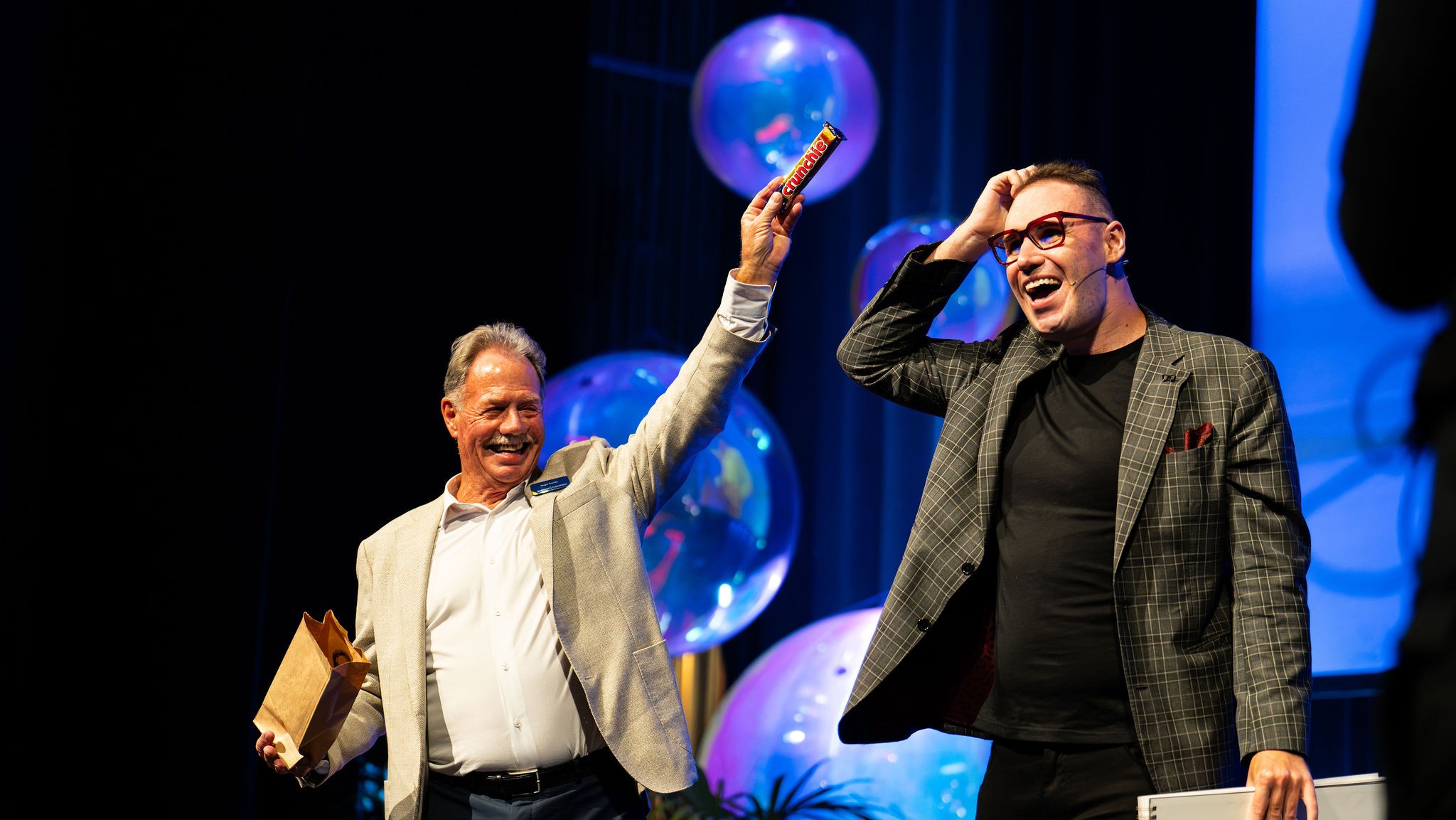
Hiring a Corporate Magician in Auckland: A Booker’s Guide
Auckland runs more corporate events than the rest of New Zealand put together. Conferences at Cordis and SkyCity, awards dinners at Shed 10 and the Viaduct Events Centre, client functions in Britomart bars and Waiheke vineyards, and Christmas parties in every function room in the city from late October onwards!
Which means Auckland also has plenty of entertainers to choose from, and very little to help a booker tell them apart. Most magician websites say roughly the same things.
Here is what actually separates them, and what to check before anything is signed.
Start with what the night needs to do
Entertainment is a solution to a problem, and the problem is different at every event.
A conference dinner where half the room has never met needs an icebreaker. An awards night needs the energy held across a long run of categories. A Christmas party needs something that pulls people together before the bar does the opposite. A client function needs guests talking about the night afterwards, ideally to other potential clients.
Working that out first makes every other decision easier, because it tells you what format you are actually shopping for.
The formats on offer
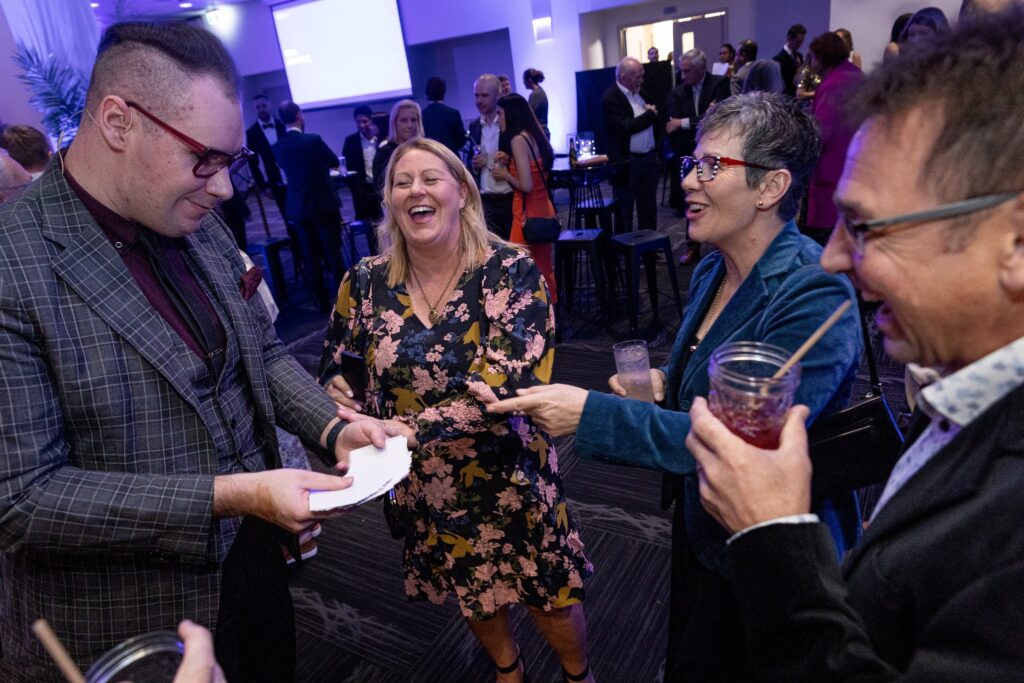
Most Auckland magicians work in one of these lanes, usually close up magic at arrival drinks. Fewer cover the full night, and fewer again have the corporate hours to carry it.
Cocktail magic, also called close up or roaming. The performer works through the room in small groups during arrival drinks or between courses. Best for mingling, breaking the ice and getting a room warm before anything formal starts.
A stage or feature show. A set performed to the whole room, usually 20 to 45 minutes. Best for creating one shared moment everyone experiences together.
MC and hosting. Running the night from the front: welcomes, introductions, awards, keeping the programme moving.
Mindreading and mentalism. Increasingly asked for in corporate rooms, and often blended into the two formats above rather than sold separately.
The format is only half the question though. Magic has moved a long way in the last decade, and there is a wide gap between an act working from routines that have been doing the rounds for years and one built from material tested in theatres and on stages overseas. Same job on paper, very different night in the room.
Plenty of events use more than one format, and that is usually where a night really comes to life! A common shape is cocktail magic during arrival, then the same performer hosting the night and doing a spot or two later. That combination is the exception rather than the norm here, which is worth knowing when comparing quotes, because two acts offering “entertainment” can be offering very different amounts of the evening.
The material and the experience both matter
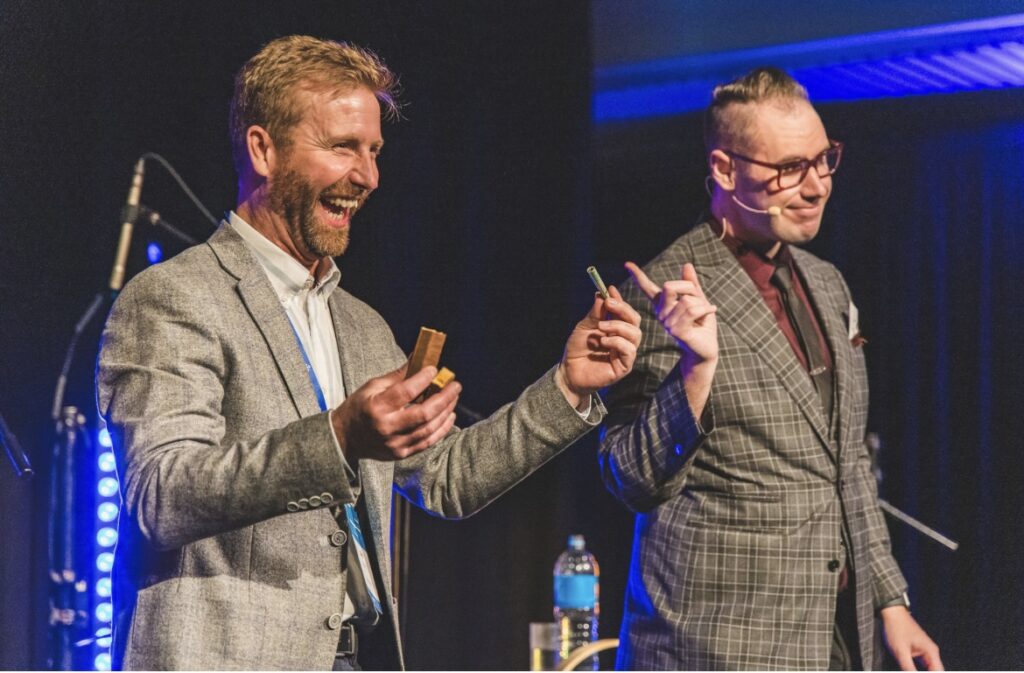
Strong material is the foundation. Anyone can learn the same routines that have been doing the rounds for years, and an audience can usually tell. The acts worth paying for have put serious time into building something of their own, and it shows in how a room reacts, because nobody in it has seen any of it before.
The experience is what carries that material safely through a corporate night. A corporate room comes with a run sheet, a client watching, a CEO who may or may not want to be part of it, an AV crew, a kitchen running behind, and a programme that has to finish on time.
So the questions worth asking are not only about the magic. Has this person worked a conference dinner before? Do they know what to do when a speech runs 15 minutes long? Can they read whether the room wants more or less of them tonight? Will they make the person who booked them look good?
Great material with no corporate hours behind it leaves the organiser managing the entertainment on a night they were meant to be enjoying. Corporate hours with tired material fills a slot and little else. The pairing is what makes a night.
Look at the proof, not the adjectives
Anyone can call themselves the best in Auckland. Proof is harder to fake, and there is plenty of it available if you know what you are looking at.
Video. Watch the audience rather than the performer. Are those reactions real, and are they coming from rooms that look like yours? Wide shots tell you the most, because they show whether a whole room is engaged or just the three people at the front. If you need an MC, look for hosting footage too, since performing and hosting are different jobs.
Photos. The same test applies. Real corporate rooms, real guests, recent enough to be relevant.
Testimonials from named companies. A quote with a company name behind it is worth ten anonymous ones. The best ones describe the night rather than the performer, because that is what you are actually buying.
Who they have worked for. A client list that looks like your industry, or your size of event, means far less guesswork for you.
Repeat bookings. A performer who gets booked back by the same company year after year is the strongest signal there is!
Range. Working around the country and overseas, or across cruise ships, theatres and corporate rooms, means the act has been tested in front of very different audiences.
Insurance and professionalism. Public liability cover, clear communication, a proper contract. Venues increasingly ask for the first one.
What to ask before booking
Six questions that sort most of it out:
- What similar events have you done recently, and can I talk to that client?
- How do you charge, and what is included? Planning calls, travel, extra sets?
- What happens if the run sheet changes on the night?
- What do you need from the venue?
- How do you handle a room that is tired, or one that does not want to participate?
- Are you insured?
The answers matter less than how they are answered. Someone who has done a few hundred corporate nights will answer without hesitating, and will usually ask you questions back.
Auckland specifics worth knowing
The season is tighter than people expect. October through early December is the busiest stretch of the year, covering awards season and Christmas functions. The best acts in Auckland are booked out months ahead for those weeks! Most corporate clients lock things in three to six months out, and some book more than a year ahead for a set annual event.
Venues vary enormously. A ballroom at SkyCity, a heritage shed on the waterfront and a winery on Waiheke all need different things from an entertainer. Ask how they handle the room you have actually booked.
Guests arrive at different times. Auckland traffic means a 6pm start can really be a 6.30pm room. Entertainment during arrival earns its keep here, because it gives the early arrivals something to do rather than standing about waiting.
Not every act you find is local. Plenty of entertainers listed for Auckland are based elsewhere or overseas, which can mean travel costs, and less flexibility if the date shifts. Worth asking early.
Booking someone who is not local
Being Auckland based is useful, but it is not the only consideration. A performer who regularly works around the country and overseas brings a wider range of material and experience into the room.
What matters is the logistics being sorted. Who is covering travel, when do they arrive, are they staying the night, and what happens if a flight is cancelled. Any experienced act will have a clear answer for all of it.
Measuring any act against that list
Those criteria are worth applying to everyone on a shortlist, including Brendan. For transparency, here is how his record reads against them.
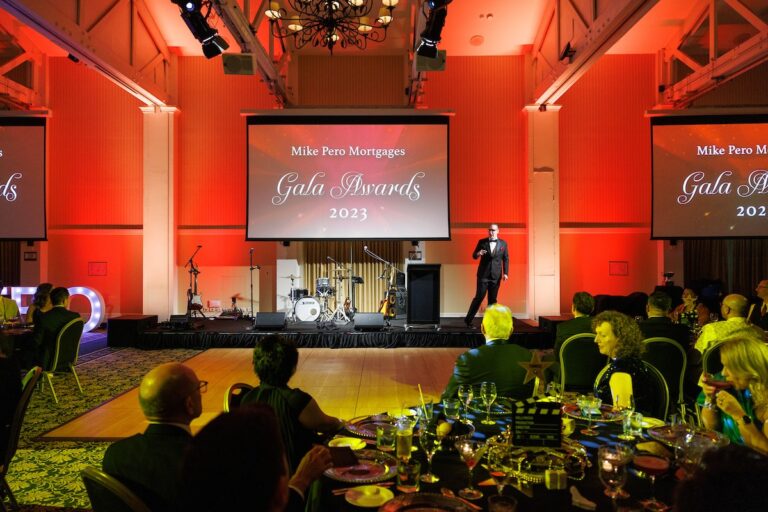
Corporate hours: 1,500+ shows, the large majority of them corporate. Conferences, awards nights, gala dinners and client functions, in rooms from 20 people to a few thousand.
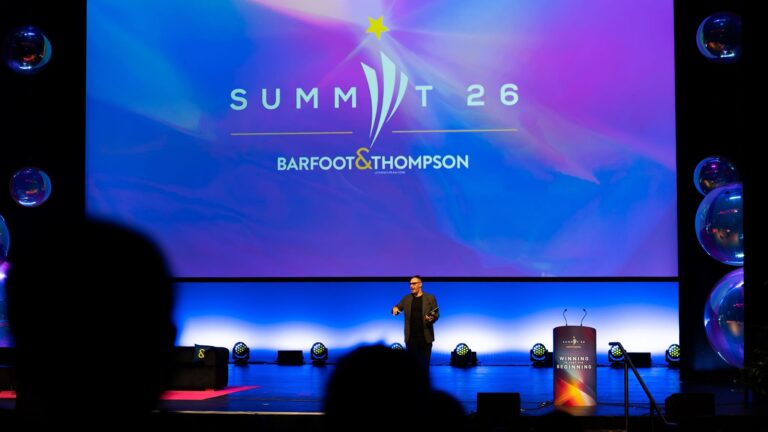
Repeat bookings: clients including Mike Pero, Stonewood Homes, SkyCity, Barfoot & Thompson, Nespresso, GEA, Harcourts, Canon and ANZ, several of whom have booked him back across multiple years.
Range: performances in 15+ countries, including headlining at Hollywood’s Magic Castle and headline shows on luxury cruise lines, plus regular work across Australia. Different rooms, different cultures, different expectations, which is what teaches an act to read a crowd rather than run a script.
All three roles in one booking: cocktail magic, MC and a feature show, delivered by the same person across one night, which is rarer in New Zealand than it sounds!
Behind the scenes: creative consultant and writer across television, theatre and brand work, including the TV series You’ve Been Scammed by Nigel Latta.
The practical stuff: public liability insurance, a clear contract, planning calls included, and a fee structure built so the night is not run against a clock.
None of that makes anyone the right fit automatically. It does mean the questions above have straightforward answers, and that is really the point of asking them.
Frequently Asked Questions
Planning an event in Auckland?
Brendan Dooley is an Auckland-based comedy magician, mentalist and MC who works conferences, awards nights, gala dinners and private events across New Zealand and internationally, with 1,500+ shows in 15+ countries behind him, including headlining at the world famous Magic Castle in Hollywood and on luxury cruise lines worldwide.