What makes a great conference MC (and how to brief one)
The real measure of a conference MC is not whether the days ran on time.
It is whether people register again next year.
A conference that feels flat gets polite feedback forms and a quiet drop in numbers. A conference where the room is engaged, where delegates leave feeling like they were part of something rather than sat through something, is the one that grows. Word gets around an industry fast, and the difference between an event that holds its numbers and one that builds them often comes down to how the room felt, not what was on the programme.
That is the job. Everything below is how it actually gets done.
Hosting is a different job from reading the running order
Plenty of conferences appoint an MC from inside the organisation, or bring in someone to read names off a card. It works, in the sense that the programme happens.
What it misses is that a multi day conference has an emotional shape. Delegates arrive distracted, warm up, hit a wall somewhere in the middle, and either finish energised or finish checking their flights. Somebody has to be reading that shape in real time and steering it. An MC who is only there to announce the next session is not doing that, because they are not watching for it.
The difference shows up in the content too. A room that is switched on absorbs a keynote. A room that is flat lets it wash over them, and the organisation has just paid a lot of money for a speaker the audience half heard.
It starts with the prep call
A prep call is not optional, and a run sheet on its own is not a brief.
The call is where the actual work begins, and it covers far more than the running order:
- What has been done before. What worked at previous conferences, and what was a struggle. Nobody knows this better than the organiser, and almost nobody gets asked.
- How last year went. The honest version, not the wrap up version.
- The group. Who is actually in the room, what they do, what they have in common and what they do not.
- What is going on in the industry. Every sector has something the room is thinking about, and delegates notice immediately when the person hosting has no idea what it is.
- The mindset people arrive with. Optimistic, nervous, exhausted, sceptical. It changes how the opening needs to be pitched.
- The goals. Not the theme on the banner, the actual outcomes the organisation wants.
- The speakers and their content. What each session is for and where it sits in the arc of the programme.
- What delegates should walk away with, from both a content point of view and a feeling point of view. These are different, and the second one is what brings people back.
- The sponsors. Who they are, what they are getting, and who needs to leave happy.
- The venue and the room layout, right down to the finer details.
That last one matters more than it sounds. An MC who has run a lot of rooms can look at a layout and tell you where the energy is going to die, whether the seating is going to isolate half the delegates, and what a small change would do. Good advice on the room is worth having before the day, not after it.
Knowing the room
The best thing an MC can do in the first few hours is stop being a stranger.
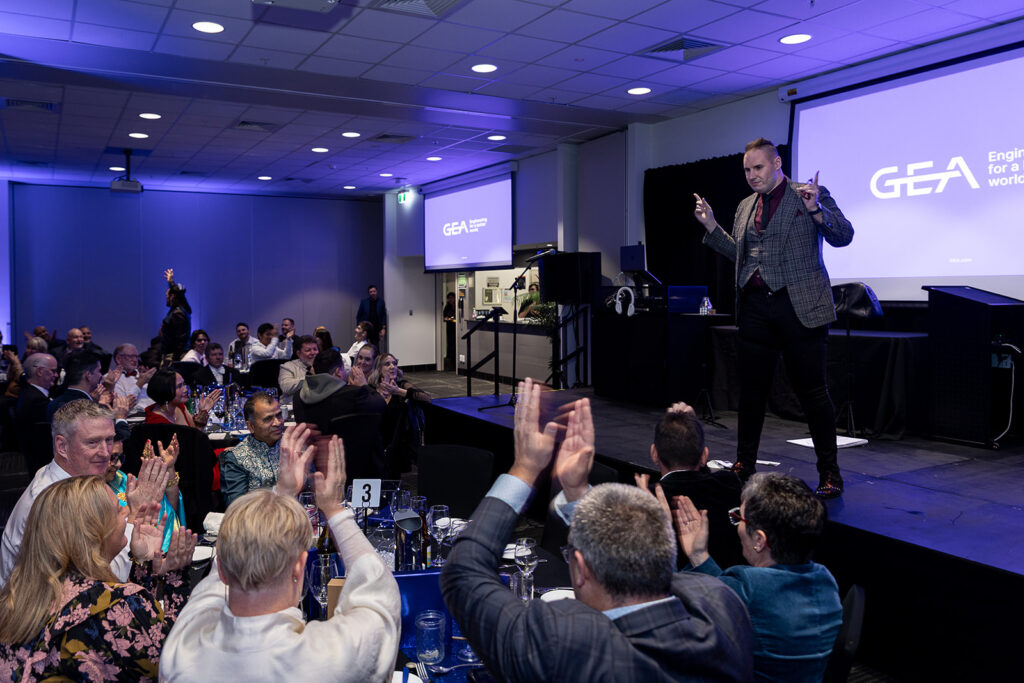
Brendan works the room properly before and between sessions, and by day two he knows most of the delegates by name. That is not a party trick, it is the thing that makes everything else possible. A host who knows the room can pitch a comment at exactly the right person, reference something from a conversation at morning tea, and hold attention without raising their voice, because the audience is listening to someone they know rather than someone on a microphone.
It also changes the feeling in the room. Delegates who have been spoken to individually behave like participants. Delegates who have not behave like an audience.
Reading the emotional flow
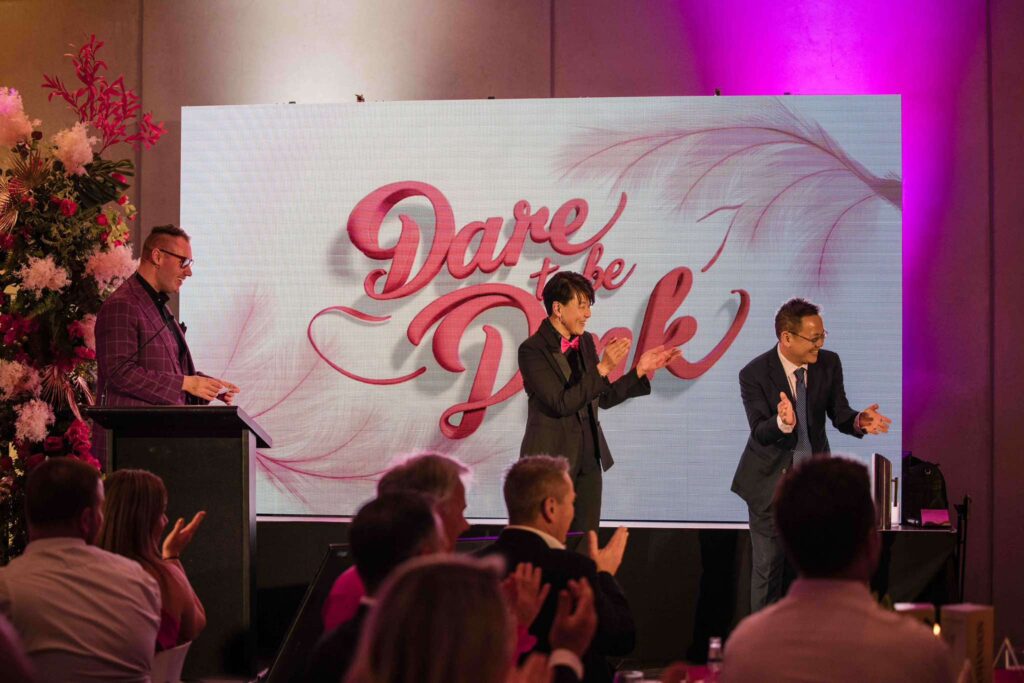
This is the part that separates a host from an announcer, and it is almost entirely invisible when it is done well.
At one conference a speaker took the room somewhere nobody expected. By the end of the session the audience was in tears, genuinely moved, and the next item on the programme needed energy and focus to work at all. Running straight into it would have wasted both sessions.
So the call was made to take a break that was never on the run sheet. The moment the speaker had created was acknowledged properly and with sincerity, the room was given ten minutes, and when everyone came back the moment was acknowledged once more, given context, and the energy was carefully rebuilt so the next session had the audience it needed. Nobody in the room knew the break was unplanned.
That is the job. Not filling gaps, but noticing what the room is actually carrying and doing something about it before it costs the organisation a session.
The same thinking applies across a multi day programme. Day one and day three are completely different rooms. Day one needs the ice broken and the nerves settled. Day three needs a group that is tired and full of information to be brought back to something they can act on. The question in front of every session is the same: what headspace do these people need to be in for the next hour to land, and how do we get them there?
Making the speakers shine
Organisers who have had a bad MC usually have the same story. The MC talked too long, made it about themselves, or introduced a serious speaker with a joke that killed the room.
The fix is straightforward and it happens before the day. Brendan introduces himself to every speaker, agrees how timing will be handled so nobody is surprised by a wrap up signal, asks what they want out of their session, and checks their introduction with them so they walk on set up for success rather than misrepresented.
Knowing the content also makes the transitions work. Instead of “next up we have”, there is a segue that connects what the room just heard to what is coming, written for that programme and nobody else’s.
And it keeps going during the sessions. Taking notes through the day means the conference can be threaded together rather than delivered as a series of unrelated items. Something a speaker said in the morning gets picked up before the afternoon session it connects to, with a reason for delegates to be in the room for it. Attendance holds up, the programme feels designed, and the speakers get amplified rather than merely announced.
Entertainment that is part of the programme

There is a version of conference entertainment that is a box ticked at the dinner, and there is a version that does a job.
Because Brendan is a comedy magician and mentalist as well as an MC, the entertainment can be woven through the programme rather than bolted on at the end. Cocktail magic and mindreading during arrival drinks does the introductions the seating plan cannot. A moment of magic used as an engagement hook inside a session makes a point land in a way a slide does not. A feature spot at the dinner gives the whole conference one shared thing to talk about afterwards.
It also means one person instead of three, already briefed, already known to the room. For an organising committee that is one less thing to coordinate on a week where everything else needs coordinating.
When the programme runs late
It will. A session overruns, a speaker’s flight is delayed, the AV drops out, the room takes twenty minutes longer to come back from lunch than anyone allowed for.
An experienced MC absorbs all of it, with backup plans from B to Z, and the room never finds out there was a problem. That is largely what the fee is for, and it is why an MC who has done fifteen hundred shows across fifteen countries is a different proposition from someone doing their third.
How to brief your MC
If you take one thing from this, take the list. Give your MC this before the day and the event gets better for it:
- The run sheet, with the timings you actually expect rather than the ones you hope for
- The conference goals, in plain words
- Who is in the room: numbers, roles, organisations, how well they know each other
- What is happening in the industry right now
- Every speaker’s name, pronunciation, title, topic, and what they want from their session
- The sponsors, what each one has been promised, and who needs a specific mention
- What delegates should walk away knowing, and what they should walk away feeling
- Last year’s feedback, including the unflattering parts
- The room layout and the AV setup
- The name of the one person to find if something goes sideways on the day
And then the thing most organisers forget: tell your MC what you are worried about. Everybody has something. Saying it out loud a fortnight before is how it gets handled.
Frequently Asked Questions
Planning a conference?
Brendan Dooley is an Auckland-based comedy magician, mentalist and MC who hosts conferences, association events, awards nights and gala dinners across New Zealand and worldwide, with 1,500+ shows in 15+ countries behind him, including headlining at the world famous Magic Castle in Hollywood and on luxury cruise lines worldwide.
Conference work runs the length of the country, including Auckland, Wellington, Christchurch and Queenstown.